Citroën Traction Avant: The French Car That Invented the Modern Road Car
By 1934, the automobile had already become familiar.
Ford had put millions of people behind the wheel. Cars were no longer strange experiments or luxury toys reserved for industrialists. But most were still built around the same old formula: a separate ladder frame, a tall body placed on top, a front-mounted engine and power sent to the rear wheels.
Then Citroën arrived with something that looked like it had come from another decade.
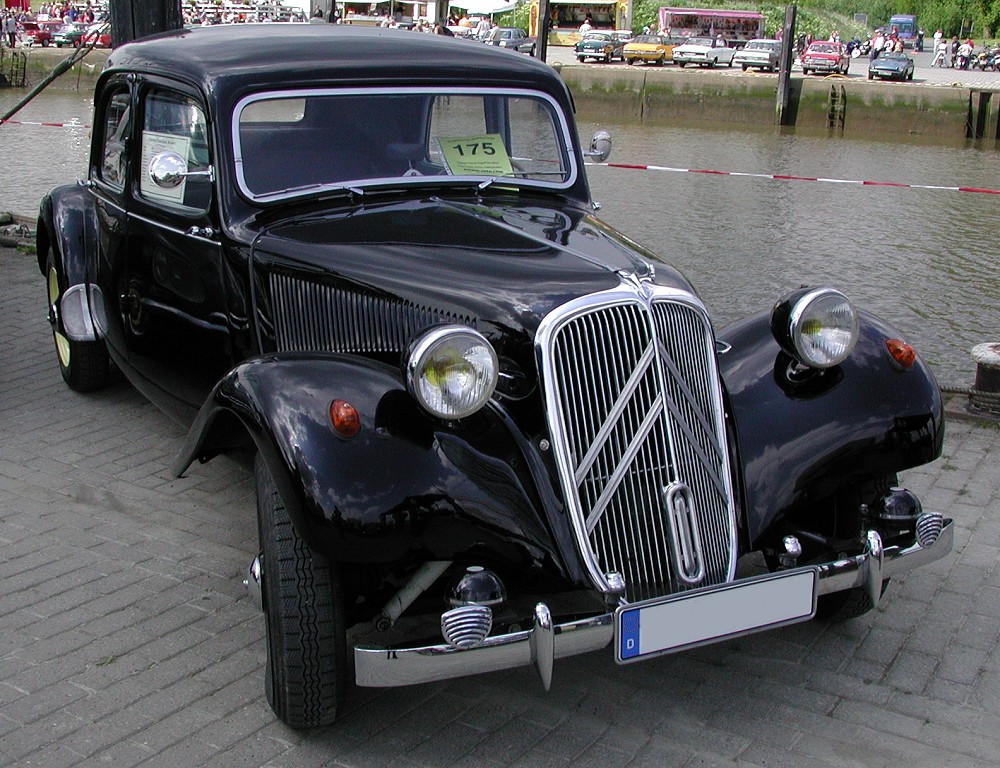
The Traction Avant sat dramatically low. Its body flowed rather than stood upright. It had no running boards. Its wheels sat close to the corners. And under its elegant French skin was a technical layout that would become the blueprint for generations of everyday cars.
Front-wheel drive. A largely unitary body structure. Independent suspension. Hydraulic brakes.
The Traction Avant was not the first car to use every one of those ideas. But it was one of the first cars to combine them at meaningful scale—and to prove that advanced engineering could be part of a usable, stylish production car. Citroën presented it on April 18, 1934, initially as the Citroën 7; “Traction Avant” soon became the name everybody remembered because it literally described its front-wheel-drive layout. (Stellantis Media)
The Car That Sat Lower Than Everything Else
The first thing people noticed about the Traction Avant was its stance.
Most cars of the early 1930s were tall because they were built on separate frames. The body was effectively placed above a heavy chassis, creating a high floor and a high centre of gravity. The Citroën took a different route.
Instead of relying on a traditional ladder frame, it used a largely unitary steel structure. The body itself did much of the structural work. That allowed the car to sit lower, look sleeker and feel more stable at speed.
Today, this seems completely normal. Nearly every modern passenger car is built around some form of monocoque or unibody construction. In 1934, it was a major shift in how a car could be engineered—and in how a car could look.
The Traction Avant was not merely lower for style. It was lower because its engineering made that stance possible.
That is why it matters in design history. It helped move the automobile away from the visual language of the horse-drawn carriage and toward the streamlined road car we recognise today.
“Traction Avant” Means Front-Wheel Drive
The name was not subtle.
“Traction Avant” translates roughly to “front traction,” or front-wheel drive. While earlier front-wheel-drive cars already existed, Citroën brought the layout into a much more ambitious and widely produced package.
With the driven wheels at the front, the drivetrain could be packaged more efficiently. There was no long prop shaft running to the rear axle, no bulky rear differential taking up space beneath the cabin, and less need for the traditional architecture that defined older cars.
The result was a car that used its space intelligently and delivered unusually confident road holding for the era.
Citroën paired front-wheel drive with independent suspension, hydraulic brakes and a low centre of gravity. Contemporary descriptions praised the Traction Avant for stability, comfort and safety—qualities that helped make it feel radically more modern than many competitors. (Stellantis Media)
It was a different kind of performance.
Not raw speed. Not loud power. Not luxury for its own sake.
The Traction Avant made a case for balance, confidence and control.
André Lefèbvre and Flaminio Bertoni: Engineering Meets Style
The Traction Avant was shaped by two key figures in Citroën history: engineer André Lefèbvre and designer Flaminio Bertoni.
Lefèbvre brought an aviation-influenced engineering mindset to the project. He thought in terms of weight, rigidity, stability and efficiency rather than simply repeating the accepted car-building methods of the day.
Bertoni gave the car its visual identity. The Traction Avant’s long bonnet, flowing fenders and low roofline made it feel elegant without becoming ornamental. It was not trying to imitate an American luxury car. It looked distinctly European: compact, purposeful and modern.
That combination became one of Citroën’s defining traits.
The brand repeatedly created cars that were not just technically unusual, but culturally unmistakable. The Traction Avant set the tone for later icons such as the 2CV and DS: cars that treated engineering as part of their personality.
The “Car of 100 Patents”
Citroën later described the Traction Avant as the “car of 100 patents.”
That nickname reflects just how much was happening beneath its bodywork. Beyond front-wheel drive and its unitary construction, the car used hydraulic brakes and independent suspension on all four wheels. These were not gimmicks for a concept car. They were built into a vehicle intended for daily use. (Stellantis Media)
The launch was also extraordinarily ambitious. Citroën rushed the programme into production as the company faced financial pressure, betting heavily on a car that required a new manufacturing approach and a major break from convention.
That gamble nearly destroyed the company.
Development costs and production difficulties contributed to Citroën’s financial collapse in 1934, after which Michelin took control. But the Traction Avant itself survived—and ultimately justified the risk by becoming one of the most important French cars ever made.
Sometimes the most influential vehicles are not born from safe decisions. They are born from companies willing to stake everything on a new idea.
A French Icon With a Darker Screen Presence
The Traction Avant’s cultural life was not limited to engineering achievements.
Its low black silhouette became deeply connected with French visual culture, especially the world of crime films, wartime stories and post-war noir. It appeared to glide rather than roll. In black paint, with its rounded fenders and narrow cabin, it carried both elegance and menace.
The car became associated with police, resistance fighters, officials, gangsters and detectives—sometimes historically, sometimes through cinema and popular memory.
That is part of what makes the Traction Avant special today.
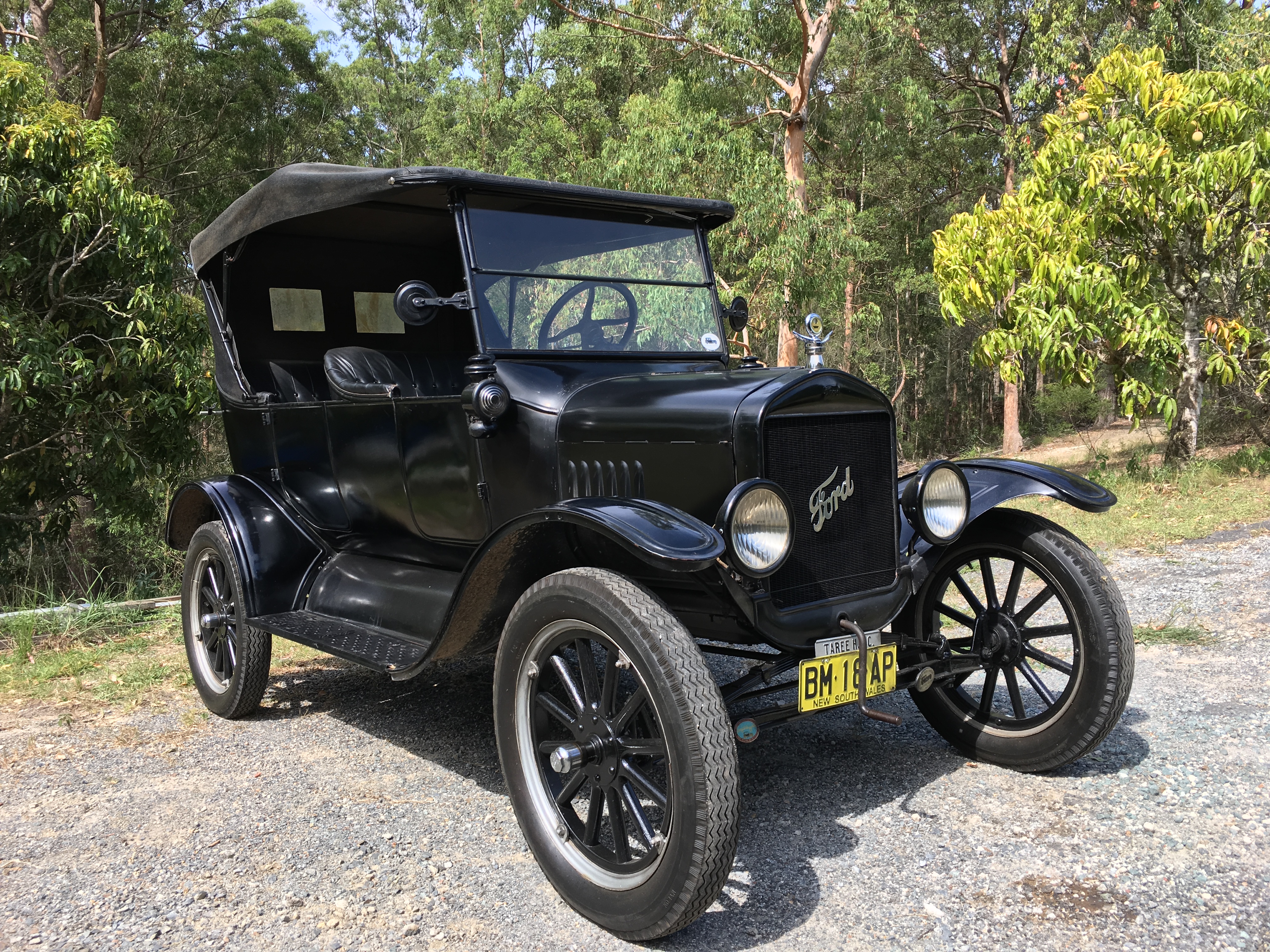
A Ford Model T feels like a machine that built the modern working world. The Traction Avant feels like a machine that drove through it after dark.
It is not difficult to imagine one parked outside a Parisian café in the rain, its headlights cutting through cigarette smoke and wet cobblestones. The car has drama built into its silhouette.
The Blueprint for the Everyday Car
The Traction Avant remained in production from 1934 until 1957. Over that long run, Citroën built it in multiple body styles and with four- and six-cylinder engines, including saloons, family-oriented variants, commercial versions, coupés and cabriolets. (Wikipedia)
Its influence is easier to see than to measure.
Look at the average modern hatchback or family saloon: front-wheel drive, a unitary body, independent suspension, efficient packaging and a low floor. The details have evolved enormously, but the core philosophy is familiar.
The Traction Avant helped establish that philosophy decades before it became industry standard.
It showed that a practical car could be technologically daring. It showed that safety and handling could shape design. And it proved that advanced architecture did not need to live only in expensive limited-production machines.
Why the Traction Avant Still Matters
The Citroën Traction Avant was not simply a classic French car.
It was a turning point.
The Benz Patent-Motorwagen created the automobile. The Ford Model T made the car accessible. The Traction Avant helped define what a modern car should feel like: low, stable, efficient, safe and intelligently packaged.
Its legacy is everywhere, even where people do not notice it.
Most drivers today never think about the fact that their car’s body is also its structure. They do not think about why the cabin floor is low, why the front wheels pull the car, or why a compact family vehicle can feel secure at motorway speed.
The Traction Avant helped make those things normal.
And perhaps that is the clearest sign of a true game changer: the ideas that once looked radical eventually become so common that the world forgets they were ever revolutionary.